


Stage Rental LED Screen
Your Professional Stage Rental LED Screen Manufacturer!
Experienced Company:Shenzhen JIulong Optoelectronics Co., Ltd. was founded in 2012. We are a high-tech enterprise integrating the development, production, sales, and engineering services of LED displays. Our main products include small space LED and LED Screens for rent.
High Quality:Jiulong Optoelectronics LED display screen has reliable quality and realistic images and has won customers at home and abroad. Our products are exported to more than 160 countries and regions in America, Europe, Asia, and Australia, with successful cases all over the world.
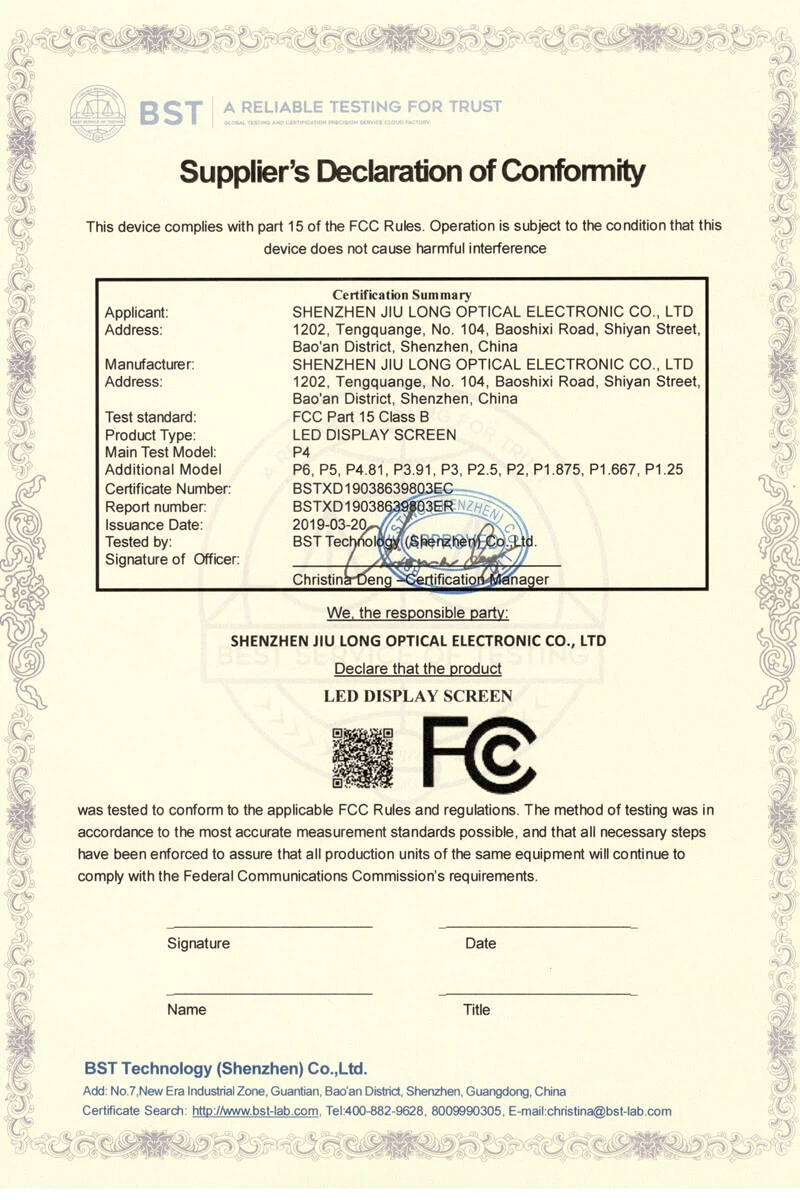
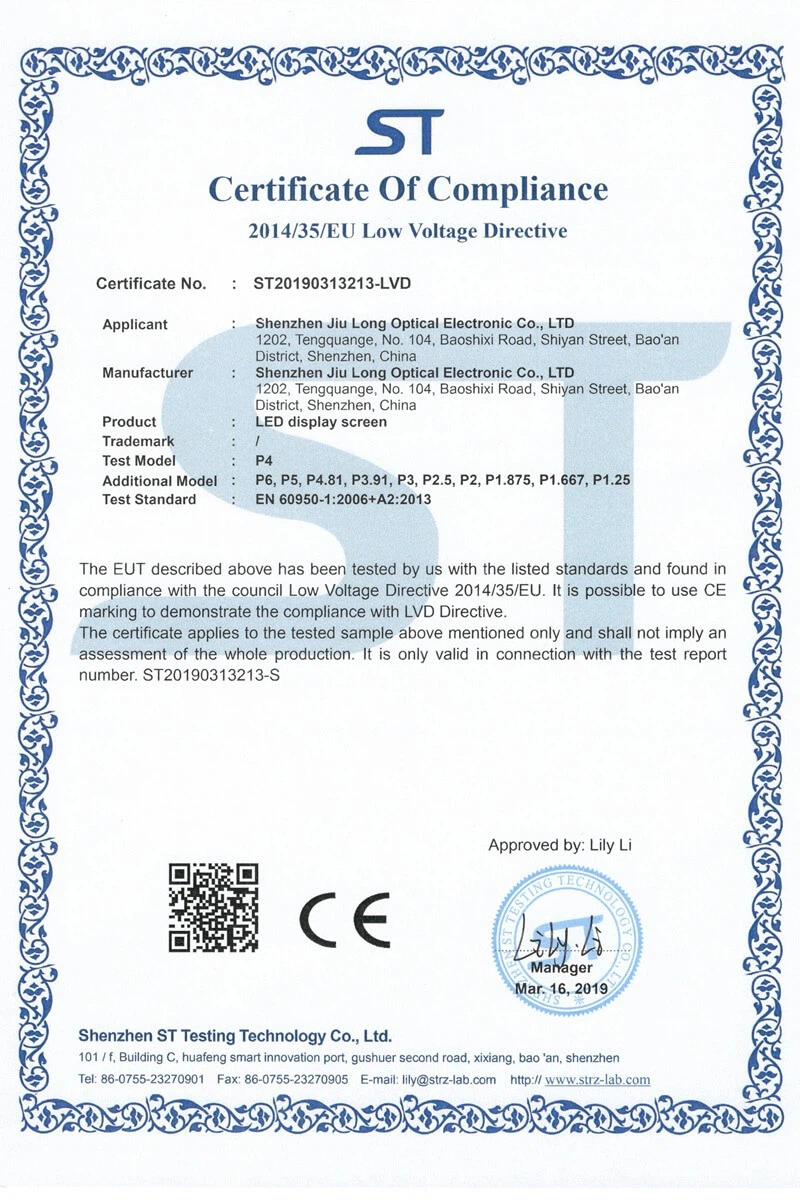
Various Certification:Our products have obtained 3C, CE, CB, IEC, TUV, FCC, RoHS, and other international safety regulations and hundreds of certificates.
Advanced Equipment & Professional Team:We have leading automated production equipment, professional management, R&D, production, and a complete sales and team of service. It provides favorable guarantees of product quality, scale, standardized production, and fast delivery.


What Is A Stage Rental LED Screen?
The stage rental LED screen is actually an LED display screen applied to the stage background. It is called a stage LED display screen, which is widely used in various performances. The shocking music effects are perfectly combined to create a magnificent and modern spectacular scene; and it can also live broadcast the super large and clear game screen, which can give people an immersive scene feeling and subvert the traditional vision experience.
Stage rental LED screens have gradually become an important choice for customers to display brand image, spread information, expand the market, and increase popularity due to their lightweight, quick installation, easy disassembly, and easy maintenance.
Characteristics of Stage LED Display
In order to meet different stage design requirements, the stage LED screen (in the industry called rental LED screen) is very different from the traditional fixed installation LED screen in terms of structure and system as follows:
1)This display consists of many cabinets that combine into one large screen display area. Currently, our LED rental cabinets are available in sizes 500 mm×500 mm and 1000 mm×500 mm.
2)In order to facilitate installation and disassembly, the cabinets need to be light, thin and compact; As the quality of the stage LED screen is getting higher and higher and the pixel pitch is getting smaller and smaller to ensure the display quality and splicing accuracy, the rental cabinet needs to be sturdy and durable.
3)In order to improve the splicing accuracy and disassembly efficiency of the LED rental box, the box is equipped with a quick locking device and even a positioning mechanism is specially provided between the LED boxes.
4)In order to protect the lamp beads on the box that can be damaged during frequent disassembly and assembly, rental LED display manufacturers usually install a guard called a mask on the front LED illuminator.
5)To meet high reliability requirements such as live broadcast, the content source signal and the control signal transmission system must have dual redundancy; Also to ensure high reliability, LED display also designed front maintenance structure, which is convenient and fast.
Types of Stage LED Screen: One Size Doesn’t Fit All
Indoor Vs. Outdoor Displays: Differences and Considerations
Stage LED Screens aren't a monolithic entity. They adapt and vary based on where they're installed – be it a cozy indoor concert hall or a sprawling outdoor stadium. Indoor Stage LED Screens typically have higher pixel densities, given that viewers are generally closer to the screen. Brightness levels can be more controlled, as they don't have to compete with natural light, leading to richer visuals. These screens are also shielded from the elements, allowing for sleeker designs without the need for protective casings.
Outdoor Stage LED Screens, conversely, have their own set of challenges and requisites. They must be bright enough to remain clear even under direct sunlight. Durability is paramount; they need to withstand varying weather conditions, from rain to wind to extreme temperatures. Protection against dust and moisture penetration is vital to ensure longevity and consistent performance. The screens are often larger to cater to more expansive audiences.
Sizes and Customizability: From Small Stages to Mega-Events
Stage LED Screens aren't just about going big; they're about fitting the right screen to the right venue. They come in various sizes, from those suitable for smaller indoor venues to colossal screens apt for mega-events. With the advancement in technology, modular designs have become increasingly prevalent. This means individual LED panels can be pieced together, allowing for tremendous flexibility in terms of screen dimensions and configurations.
When hosting an event, one must consider the venue size, audience number, and viewing angles to determine the most suitable stage LED screen size. After all, an overly large screen in a compact space might overwhelm the viewers, while a screen too small in a vast area might render itself ineffective.
Special Features and Enhancements: Interactive Capabilities, AR Integrations, Etc.
Modern Stage LED Screens are not just passive display units. They've evolved into interactive platforms, offering functionalities beyond just video display. Some are equipped with touch-responsive features, allowing audiences to interact with displayed content. Others might integrate Augmented Reality (AR) elements, blurring the lines between the physical and digital realms and offering an enriched multimedia experience.
These advancements open a plethora of opportunities for event organizers. Imagine a concert where attendees can vote for the next song via the stage LED screen or a product launch where viewers can interact with a 3D model of the product.

Application Scenarios of Rental LED Screens
Stages
The main market demand for rental LED screens is in stage performance. LED display has long become one of the ways of expressing the pursuit of art on the stage.
In terms of display effect, the LED rental screen can almost achieve seamless splicing, and according to the creative design requirements of the stage, different sizes, different shapes, and different types of creative stage effects can be built to achieve a full range of shocking visual impact.
In terms of installation, the rental screen supports quick installation and disassembly. The screen can be fixed and disassembled only through the quick lock, which greatly shortens the installation and disassembly time and saves time and labor costs. The good visual performance and flexible and convenient installation methods of LED rental screens provide necessary technical support for information release and play an important role in achieving display and publicity effects.
Exhibitions
The advantages of a rental LED screen include quick assembly and disassembly, as well as easy transportation. Each exhibition has a relatively short exhibition time, and the LED screen can display the new products through the eye-catching dynamic display effect.
Performances
In the stage performance, different programs require different scenes to cooperate, and the LED display screen is required to be flexible and changeable. In this case, a rental LED screen is generally selected. With the continuous maturity of technology, the LED display screen is clearer, and the performance is more stable. It can realize more flexible and changeable scene changes, complete the screen switching instantly, and realize any display effect through technical means.
Meeting rooms
Conference planners need to rent a Rental LED screen to organize meetings. When organizing conferences, especially large-scale conferences, this professional rental screen can be quickly assembled to ensure layout speed.
Meetings of different sizes have different requirements for scenarios. The flexibility of the rental LED screen allows it to be spliced into different sizes at any time to suit different types of meetings, especially large ones.
Weddings
A wedding is the most anticipated and exciting event in anyone’s life. An LED screen for a wedding can be a great way to make it more memorable for the couple as well as the guests who are taking their valuable time away to attend the function of their loved ones.
The wedding venue rental LED displays can be installed to show the couple’s pre-wedding memories as well as live streaming from the event. Live streaming contributes to giving guests the best experience possible by providing a brighter and clearer view of the entire function, whether it is taking place indoors or outdoors.
Sports events
Rental LED screens are an unbeatable resource for participating in sports events or outdoor performances such as sports events. In addition to providing perfect visibility in all lighting conditions, it can also be used as a scoreboard during matches.
Advantages Of Using Stage LED Screens In Events
Large LED screens for events are commonly used to spice up the show's attendees' and participants' viewing experience. Having big LED screens on stage gives you the following benefits:
Lively Stage Background
The vivid color and brilliant effects it gives can help you pull off a spectacular show for your audience. You can have a more pleasing stage background which adds positively to the visual experience of the audience. A lively stage background also evokes wonderful feelings in the audience, which affects audience engagement and participation.
Optimized Visibility
If you are producing an event with big crowds like a concert, it is crucial to ensure that everyone has a close view of what is going on the stage via the concert screens. Installing a concert LED screen is a way to respect your audience's right to see and enjoy the show.
Decorative Lumination
Stage LED screens also provide better lamination in your event. It helps set the environment's mood, which is vital in providing your audience with a one-of-a-kind experience and leaving a great impression.
Important Technical Specifications of LED Screens
Pixel Pitch
Pixel pitch is the distance between two pixels in millimeters and a measure of pixel density. It can determine the clarity and resolution of your LED screen modules and the minimum viewing distances. Generally speaking, an indoor rental LED display should own smaller pixel pitch than an outdoor rental LED display.
Resolution
The number of pixels in a display determines the resolution, written as (pixel width) x (pixel height)p. For example, a screen that has a resolution of 1920x1080p is 1,920 pixels wide by 1,080 pixels high. The high resolution means high image quality and closer viewing distances.
Brightness
The units of measurement is nits. Outdoor LED panels need higher brightness at least 4,500 nits to shine under sunlight, while indoor video walls only need brightness between 1,000 and 3,000 nits.
IP Rating
IP rating is the measurement of resistance to rain, dust and other natural elements. Outdoor LED screens require at least an IP65 (the first number is the protection level of preventing solid objects and the second is for liquids) rating to run stable in different weather and IP68 for some areas with accumulated rainfall, whereas that of indoor LED screens can be less strict. For instance, you can accept IP63 rating for your indoor rental LED screen.
Tips for Maintaining LED Rental Screens
LED display screens are indispensable in various large-scale events such as advertising, performances, corporate gatherings, press conferences, and more. Many companies directly rent from lighting and sound rental companies. Therefore, the safety and stability of stage rental LED display screens are particularly important throughout the entire usage process. Here are some tips on maintaining stage rental LED display screens.
Stable Power Supply
Firstly, it is essential to have a stable power supply with good and intact grounding protection. Avoid using the LED display in adverse natural conditions, especially during severe thunderstorms. To prevent potential issues, both passive and active protection measures should be considered. Keep items that may harm the LED display away from the screen, and when cleaning the screen, do so gently to minimize damage. Always turn off the LED display before shutting down the computer.
Avoid Playing Solid Color Screens for Extended Periods
During playback, avoid prolonged exposure to solid white, red, green, blue, or other single-color screens to prevent excessive current, excessive heating of power lines, LED damage, and any adverse effects on the lifespan of the LED display. Never disassemble or splice the screen arbitrarily! The relationship between the stage rental LED display and our users is extremely close, and it is essential to perform regular cleaning and maintenance.

Humidity in the Operating Environment
Additionally, maintain the humidity level in the operating environment of the stage rental LED display. Avoid allowing anything with a moisture-prone nature to enter your stage rental LED display. Powering up a stage rental screen with humidity can lead to corrosion of the LED display components, resulting in permanent damage. This should be strictly avoided. If, for any reason, water enters the stage rental screen, immediately cut off the power and contact maintenance personnel. Only resume usage after the display panel inside the screen has dried.
Regular Dust Removal
Avoid exposing the stage LED rental screen to outdoor environments with prolonged exposure to wind, sun, dust, and other elements that may cause visible dirt. After a certain period, dust will accumulate on the screen, requiring prompt cleaning. The surface of the stage rental LED display can be wiped with alcohol or dusted using a brush or vacuum cleaner. Do not wipe it directly with a wet cloth.
Choosing the Right LED Stage Screen for Rental
LED stage screens for rental are becoming more popular than ever in creating unique and impressive visual experiences at large-scale events. To choose the most suitable LED screen, you need to consider the following factors:
Main Screen Selection
The main screen is the centerpiece of the stage, where the main images and videos are displayed. High resolution is crucial, especially when displaying detailed images and videos. The shape and size of the screen should match the stage space and performance requirements.
Auxiliary Screen Selection
Auxiliary screens are placed at the sides of the main screen, expanding the display space and enhancing the audience's experience. Special screens such as S-shaped curved screens or flexible screens can be used to create unique effects and attract attention.
Extended Stage Screens
In large-scale events, extended stage screens are used to display images and videos in distant locations for the audience. Choosing the size and location of extended screens should be carefully considered to ensure everyone can see the screens.
Control System
The control system is essential for managing content and effects on LED screens. Choosing the right control system depends on the complexity of the performance program and the number of screens used.
Safety and Durability
LED screens for rental need to withstand impacts and prevent damage to ensure safety during transportation and use. Choosing products with sturdy structures and ensuring aesthetics when installed on stage is crucial.
Convenient Installation and Removal
Installing and removing LED screens should be quick and convenient to save time and effort. Lightweight and thin box structures that can be disassembled and transported easily are ideal choices to reduce time and effort in installation and removal.
Our Certification




Frequently Asked Questions about Stage Rental LED Screen
Q: What is a stage LED display?
Q: Where to use the Led Screens for hire?
Q: What is an LED screen used for?
Q: What is the use of screens on stage?
Q: What is the best aspect ratio for an LED screen?
Q: What are the width and height of LED screens?
Q: What is the standard size of an LED display?
Q: What is the difference between LED screen and normal screen?
Q: Is LED screen better than projector?
Q: What is the led display contrast ratio definition?
Q: How do outdoor LED screens work?
Q: Does screen size affect quality?
Q: How long will an LED screen last?
Q: How much power does an LED screen use?
Q: How to Distinguish the Outdoor Display and Indoor Display?
First of all, let's talk about the indoor LED display. In the past, the indoor LED display was all surface-mounted. The characteristics of the indoor surface-mounted display are high-definition and colorful, but the disadvantage lies in the high price.
Outdoor display are mainly plug-in lights. Basically, indoor display is surface-mounted. Because of the higher outdoor daylight, the brightness of outdoor LED display is relatively stronger. So, the brightness of indoor display is not as high as outdoor one. The characteristics of outdoor and semi-outdoor module unit board: high brightness, waterproof, rich color. The disadvantage is that its installation requires technical guidance.
2)Brightness
If the indoor unit board is used outdoors, the brightness is far from meeting the requirements and it looks like it is not bright enough. The brightness of indoor unit board is much darker than outdoor LED unit board. However, when the outdoor unit board is used indoors, the brightness is too bright. So, please use indoor unit board as far as possible.
3)Waterproofing
The surface of outdoor products must be waterproof. So, the outdoor display is made up of waterproof boxes since the waterproof of outdoor display should be taken into consideration. Similarly, the indoor display may be made of boxes or not. If the boxes used outdoor are simple and cheaper, its back will not be waterproof enough. In this case, the border of box must be well covered. Generally, there is glue filling of these boxes, but not indoors.
4)Installation
According to different environmental conditions of users, there is a variety of installation methods of LED display, including wall-mounted, cantilever, inlaid, upright, standing, roof, mobile, arc and other installation methods. Indoor installation is convenient and simple with few styles which are relatively single. On the contrary, the installation of outdoor LED display is difficult and dangerous.
5)Price
The viewing distance of indoor LED display is generally not far. Therefore, its price is definitely higher than outdoor LED display for its higher definition. Generally, the viewing distance of outdoor LED display is relatively longer than those used at outdoors and it can't be seen clearly if the definition is too high. So, it is natural that there is a price difference among different types of LED display for they are customized according to the actual viewing distance.
As one of the leading stage rental LED screen manufacturers and suppliers in China, we warmly welcome you to buy customized stage rental LED screen from our factory. All OEM&ODM products are with high quality and competitive price. Contact us for quotation.
led video wall module, Digital Advertising Signs Outdoor, led electronic billboards