


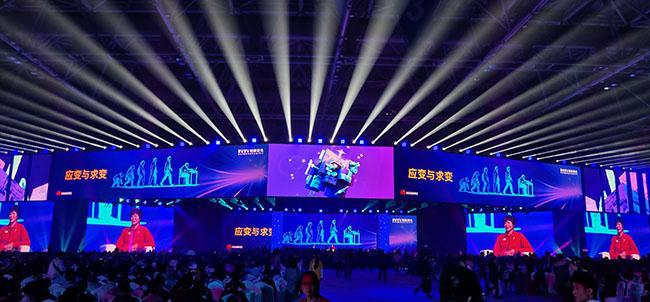
In today's era of rapid digital information dissemination, LED displays, as an efficient, intuitive, and highly visually impactful information display carrier, are widely used in various commercial activities, cultural performances, sports events, and public information release scenarios. For many customers with temporary or phased display needs, renting LED displays is undoubtedly a more economical and flexible choice compared to purchasing. However, faced with a wide range of LED rental display products and varying rental services in the market, how to make wise decisions and ensure renting cost-effective and reliable displays has become an urgent problem for many customers. This article will deeply analyze each key link of LED rental displays, provide you with a comprehensive and practical guide, and introduce you to the outstanding performance of Jiulong Optoelectronics in this field.
1.Definition and Unique Charm of LED Rental Displays
LED rental displays, as the name suggests, are LED displays specially provided to customers in the form of rental. It is not a specific type of display, but covers a variety of display products based on LED technology. These products are fully considered in design and manufacturing for the special needs of rental application scenarios such as frequent disassembly and assembly, convenient transportation, and rapid construction.
Compared with traditional fixed-installation LED displays, LED rental displays have many significant advantages. Firstly, they have extremely high flexibility. They can quickly perform modular splicing according to the spatial layout, shape of different event venues and the specific display needs of customers, forming screens of any size and shape, whether it is a conventional rectangle, or creative arcs, irregular shapes, etc., which can be easily realized. This flexibility enables LED rental displays to play a significant role in various complex and changing event scenarios. Secondly, LED rental displays have excellent portability. They adopt a lightweight design and an easy-to-disassemble and assemble structure, which greatly reduces the difficulty of transportation and handling, significantly shortens the time for installation and disassembly, and can be efficiently transferred between different venues, saving customers a lot of time and labor costs. Furthermore, from an economic perspective, renting LED displays avoids customers' one-time high equipment purchase investment. They only need to pay a relatively low rental fee to obtain high-quality display services within a specific time period, which is especially suitable for temporary and short-term display projects, effectively improving the efficiency of fund use.
2.Application Scenarios: The Diverse Stages of LED Rental Displays
1.Commercial Activity Field
In commercial promotion activities, LED rental displays, with their high-brightness and high-definition display effects, can vividly show the characteristics, advantages and promotional information of products, instantly attract the attention of passing customers and stimulate their desire to buy. For example, in the anniversary celebration of a large shopping mall, by setting up a large-area LED rental display in the mall's atrium or entrance, rolling out discount information of various products, new product display videos, etc., it can create a warm promotional atmosphere and greatly enhance the influence and sales performance of the event.
For enterprise new product launches, LED rental displays are an indispensable important display tool. It can present the details, function demonstrations, unique designs of new products to the on-site audience with shocking visual effects. Cooperating with wonderful stage performances and explanations, it adds a strong sense of technology and fashion to the new product launch, helping enterprises successfully launch new products and attract wide attention from the media and the market. Like the new product launches of Apple, Huawei and other technology giants, large-scale and high-standard LED rental displays are used to create unforgettable display effects.
2.Cultural Performance Stage
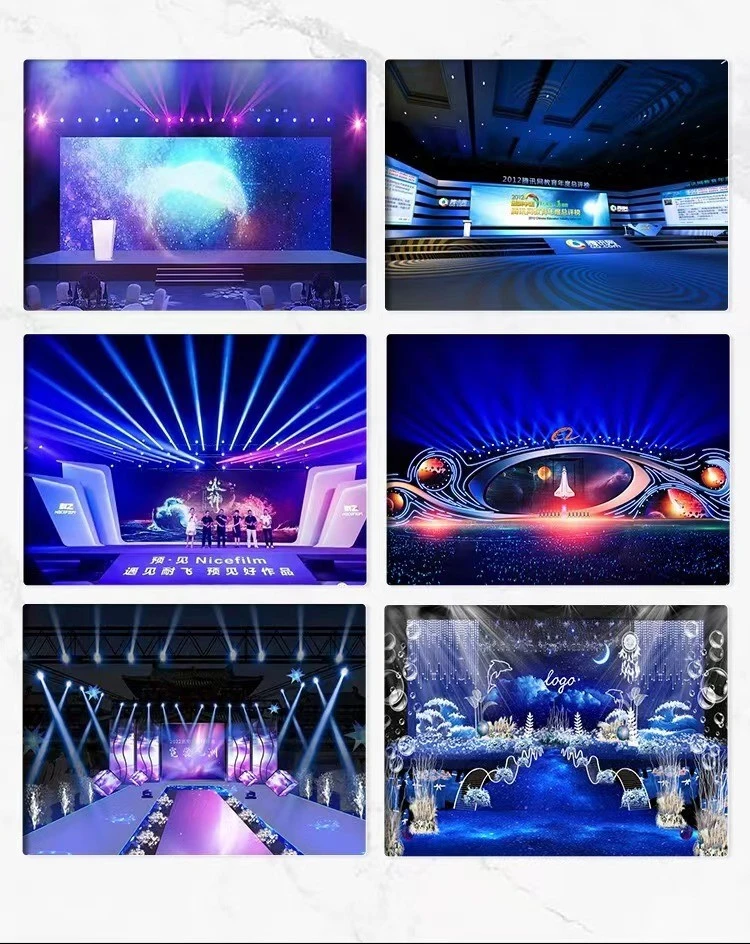
In large-scale cultural performances such as concerts and music festivals, LED displays, as the stage background, can change colorful pictures in real time according to the style and atmosphere of different songs and performance segments, bringing audiences an immersive audio-visual experience. For example, in Jay Chou's concert, the LED rental display cooperates with the rhythm of the songs, presenting beautiful animation scenes, classic lyrics subtitles and wonderful close-ups of the singer, which perfectly integrates with stage lighting and sound, pushing the atmosphere of the concert to a climax again and again.
In various stage plays and drama performances, LED rental displays can flexibly create different scene backgrounds. Whether it is an ancient palace courtyard, a mysterious forest wonderland, a modern bustling city, or a sci-fi future world, they can be realistically displayed through the screen, breaking through the limitations of traditional stage settings, providing actors with a more diverse background environment for their performances, and enhancing the artistic appeal of the performance.
3.Sports Event Venues
In sports events, LED rental displays are widely used in event information display, replay of wonderful moments and advertising. In sports venues such as football fields and basketball courts, large LED rental displays can display key information such as the score, time and player data of the game in real time, facilitating the audience to keep abreast of the progress of the event. At the same time, through the slow-motion replay function, the wonderful goals, extreme saves and other moments of athletes are clearly presented, so that the audience will not miss any wonderful moment. In addition, advertising during the event is also efficiently realized with the help of LED rental displays, bringing considerable economic benefits to the event organizers. For example, in NBA games, LED rental displays around the venue scroll through various sponsors' advertisements, becoming an important part of the event's commercial operation.
4.Public Information Release
In transportation hubs such as airports, stations and wharves, LED rental displays are used to release real-time flight take-off and landing information, train timetables, ship schedule dynamics, etc., facilitating passengers to obtain travel information in a timely manner and arrange their trips reasonably. At the same time, these displays can also play safety tips, weather warnings, city promotional videos and other contents to provide passengers with diversified services. For example, in Shanghai Hongqiao Airport, the large-area LED rental display in the waiting hall clearly shows the status information of each flight, which greatly improves the travel efficiency of passengers.
In public places such as squares and parks, LED rental displays can serve as a window for urban cultural propaganda, playing public service advertisements, cultural activity notices, urban construction achievements displays and other contents, enriching citizens' cultural life and improving the city's image and cultural atmosphere. Like the LED rental display in Tiananmen Square, Beijing, during major festivals and events, it plays pictures and promotional videos with celebration themes, becoming a beautiful landscape.
3.Hard-Connected Rental Displays and Soft-Connected Rental Displays: Differences and Applications of Technical Paths
1.Analysis of Hard-Connected Rental Display Technology
Hard-connected rental display generally refers to the direct connection between the control system and the LED module through a dedicated precision connector. This connection method makes the interior of the screen clean and tidy without redundant wires, bringing great convenience to customers' use and maintenance.
In terms of structural stability, due to the use of dedicated precision connectors, the connection between various parts is tight and firm, which can enhance the structural stability of the entire display to a certain extent and reduce failures caused by loose wires and other problems. In terms of display performance, the hard connection method reduces interference and loss during signal transmission, helps ensure the stability and timeliness of signal transmission, so that the display can present more stable and clear image effects, which is suitable for occasions with high requirements for display quality and stability, such as high-end conferences and important commercial exhibitions. In addition, its clean internal structure is also conducive to heat dissipation, which can reduce the probability of equipment failure caused by heat dissipation problems to a certain extent and prolong the service life of the equipment.
2.Characteristics of Soft-Connected Display Technology
Soft-connected display generally refers to the connection between the control system and the LED module through power lines and signal cables. The volume of its control box is usually larger than that of the hard-connected one.
A major advantage of soft-connected display is its relatively low cost, which is attractive to customers with limited budgets. Moreover, because various parts are connected by wires, when a certain accessory has a problem, it can be replaced separately, reducing maintenance costs to a certain extent. However, the soft-connected display has many internal wires and a relatively complex structure, so it will be relatively troublesome for customers to maintain. They need to spend more time and energy to sort out the wires and troubleshoot problems. In terms of signal transmission, more wires may increase the risk of signal interference and have a certain impact on the display effect, so it is relatively less used in scenarios with extremely high requirements for display quality. But for some small and medium-sized activities that are sensitive to cost and have not particularly strict requirements for display effects, soft-connected display is a good choice.
3.Technical Selection Suggestions in Different Scenarios
In high-end commercial activities, important conferences, large-scale exhibitions and other scenarios with high requirements for display quality and stability, and hoping for convenient later maintenance, hard-connected rental display technology is the ideal choice. Its stable signal transmission, clean internal structure and convenient maintenance characteristics can meet the high requirements of these scenarios for displays and ensure the smooth progress of activities.
For small and medium-sized activities with limited budgets, such as small promotional activities and community cultural performances, soft-connected display technology has more cost advantages. Although its maintenance is relatively troublesome, in these scenarios where the requirements for display effects are not extreme, it can save customers a certain amount of money on the premise of ensuring basic display functions. At the same time, if there is a frequent need to replace accessories of the display in the activity, the advantage of soft-connected display in replacing accessories separately can also be reflected.
4. Quality Assurance Measures When Renting LED Displays
1.Review of Supplier Qualifications and Reputation
When choosing an LED display rental supplier, it is first necessary to strictly review its enterprise qualifications. Check whether the supplier has relevant industry certifications, such as CE, RHOS, FCC certifications, etc. These certifications are authoritative recognitions of the enterprise's production management capabilities and product quality. At the same time, through the Internet, industry forums, customer reviews and other channels, widely understand the supplier's market reputation and word of mouth. A supplier with a good reputation in the industry and high customer satisfaction is usually more able to ensure high-quality products and services. For example, you can check the supplier's user reviews on professional LED display industry websites, or consult other customers who have cooperated with the supplier about their actual cooperation experience.
2.Key Points of Equipment Quality Inspection
After the rented equipment arrives, it is necessary to conduct a comprehensive and detailed quality inspection. Firstly, check whether the appearance of the display has defects, such as scratches and deformation on the surface of the box, damage and missing of LED lamp beads, etc. Then, conduct a power-on test, focusing on testing the brightness uniformity of the screen. Use a professional luminance meter to measure at different positions of the screen to ensure that the brightness difference in each area is within a reasonable range (generally requiring brightness uniformity > 95%) to avoid local over-brightness or under-brightness. At the same time, test the color reproduction. By playing standard color test pictures or videos, observe whether the colors presented by the display are consistent with the original colors. The color deviation value (ΔE) should be as small as possible. Generally, high-quality displays have ΔE < 3. In addition, it is necessary to check the refresh rate of the screen. For activities with high-speed dynamic picture display requirements (such as sports events, concerts, etc.), it is necessary to ensure that the refresh rate of the display reaches more than 3840Hz to avoid problems such as trailing and stuttering in the picture.
3.Professional Control of Installation and Commissioning
Professional installation and commissioning are key links to ensure the normal operation of the LED display and achieve the best display effect. During the installation process, suppliers are required to strictly operate in accordance with the product installation instructions and relevant industry standards to ensure that the installation angle and flatness of the screen meet the requirements. For outdoor installed displays, special attention should be paid to the implementation of windproof, rainproof, lightning protection and other protective measures, such as installing firm windproof brackets and make the grounding treatment of the screen. In the commissioning stage, technicians should use professional debugging tools and software to finely adjust various parameters of the display, including brightness, contrast, color temperature, image ratio, etc., to adapt to the light environment and display needs of the event site. At the same time, multi-signal source access tests should be carried out to ensure that the display can stably compatible with common signal sources such as HDMI, SDI, DVI, so as to avoid signal transmission failures at the event site. Before the event, a long-term stability test should also be carried out to simulate the actual use situation during the event, run the display continuously for several hours or even a whole day, observe whether there are abnormal phenomena such as dead lights, flower screens, black screens, and timely find and solve potential problems.
5.Detailed Explanation of the Cost Composition of Renting LED Displays
1.Equipment Rental Fee
The equipment rental fee is the core part of the entire rental cost, and its level mainly depends on the type, specification and rental duration of the display. From the perspective of display types, small-pitch rental LED displays (such as P1.5 - P2.5) have relatively high rental fees due to their high pixel density and high display precision; while conventional indoor and outdoor displays such as P2.6, P2.9, P3.9, and P4.8 have relatively affordable rental fees. They are suitable for large squares, sports events, concerts and other scenes where the audience's viewing distance is relatively far; small-pitch indoor rental displays are often used in exhibitions, conferences and other occasions for medium-distance viewing; high-end occasions are mainly used in high-end conferences, TV studios and other close-up viewing scenes with high requirements for picture quality. The specific rental fee will vary depending on the actual situation of each country.
The size of the display also has a significant impact on the rental fee. Modern LED displays usually adopt a standardized box design (common box sizes are 500mm×500mm or 500mm×100mm), and the rental fee follows the "law of diminishing marginal cost". For example, generally speaking, the daily rent of a single box is about 50 - 100 yuan. When the rental area exceeds a certain scale (such as 50㎡), suppliers often give a certain step discount, such as 10% off for 100㎡. In addition, the newness of the equipment will also affect the rental price. New equipment usually has 20% - 30% higher rent than equipment that has been used for a period of time due to better performance and lower failure rate. However, for some important activities with high requirements for picture quality and equipment stability, choosing new equipment is undoubtedly a more reliable guarantee.
2.Transportation and Installation Fees
The calculation of transportation fees is usually related to the transportation distance, transportation mode, and the weight and volume of the goods. For LED display rental, suppliers generally charge transportation fees according to the method of "round-trip mileage × unit price". For example, 5 yuan per kilometer. If cross-provincial transportation is involved, additional tolls, loading and unloading fees, etc. need to be charged. In terms of installation fees, the charging standards vary greatly according to the complexity of the installation method. For simple suspension installation, the cost is about 5000 - 20000 yuan / day; for irregular structure installation (such as arc-shaped, spherical screen installation), due to higher technical requirements and more complex construction technology, the installation cost may soar to 15000 - 50000 yuan / day; if the installation work involves high-altitude operations (more than 10 meters), an additional 30% - 50% fee is required. Therefore, when renting a display, customers should clarify the specific transportation and installation plans and cost details with the supplier in advance to avoid cost disputes in the later stage.
3.Technical Support and Maintenance Fees
To ensure the stable operation of the LED display during the rental period, suppliers usually provide technical support and maintenance services, and this part of the fee also constitutes part of the rental cost. The deployment of on-site technical support personnel is an important link to ensure the normal operation of the display. Generally, suppliers will charge according to the standard of 1000 - 2500 yuan / person / day. According to the activity scale and screen complexity, at least 1 engineer and 1 operator are usually required. In addition, some high-end rental services will also provide a remote monitoring system, through which suppliers can real-time monitor the picture quality, operating status and other parameters of the display, and timely find and solve potential problems. The cost of this service is about 500 - 1500 yuan / day. At the same time, considering the possible emergencies at the event site, such as equipment damage, signal failure, etc., the supplier will also charge a certain proportion of emergency plan fees, generally 5% - 10% of the total rent, to ensure that they can respond quickly in emergency situations, replace spare equipment in time, and ensure the smooth progress of the event.
4.Content Production and Customization Fees
If customers need suppliers to provide display content production and customization services, this will also generate additional fees. The cost of content production varies according to the complexity of the production. Basic material processing, that is, adjusting the pictures, videos and other materials provided by customers to the resolution and format suitable for LED display playback, costs about 500 - 1000 yuan / hour; for dynamic effect programming, such as making cool dynamic effects such as 3D modeling and particle animation, the cost is calculated by the second, usually 500 - 2000 yuan / second; when using multiple screens for splicing display, in order to ensure the synchronization and coordination of the pictures between the screens, multi-screen synchronization control debugging is also required. The cost of this service is generally about 1000 - 3000 yuan. When renting a display, customers should communicate with the supplier about the details and costs of content production in advance according to their own content needs, so as to reasonably plan the budget.
6. Jiulong Optoelectronics: A Bright Star in the Field of LED Rental Displays
Jiulong Optoelectronics has built substantial technical expertise and extensive practical experience in LED rental display solutions. The company has delivered exceptional products and premium services to numerous clients, earning widespread market recognition and acclaim.
(I) Innovation Leadership
Jiulong Optoelectronics remains committed to innovation-driven development, continuously increasing R&D investments. Its research team comprises seasoned industry experts and technical specialists. The company has achieved multiple breakthroughs in LED display technology, with its proprietary advanced LED chip technology significantly enhancing screen brightness, contrast ratio, and color saturation. This innovation enables Jiulong Optoelectronics' LED rental displays to deliver more realistic, detailed, and vibrant visual effects. Furthermore, the company maintains industry-leading advancements in display cooling systems, energy-saving technologies, and protective mechanisms. By optimizing thermal design and utilizing high-efficiency driver chips, Jiulong Optoelectronics effectively reduces energy consumption, extends equipment lifespan, and improves stability and reliability across diverse environments.
(II) Quality Assurance
Jiulong Optoelectronics enforces near-mandatory quality control standards, strictly adhering to international quality management systems and industry benchmarks throughout the entire process-from raw material procurement to production and final product inspection. The company employs premium LED chips, high-quality electronic components, and durable housing materials to ensure...