


Classification by color:
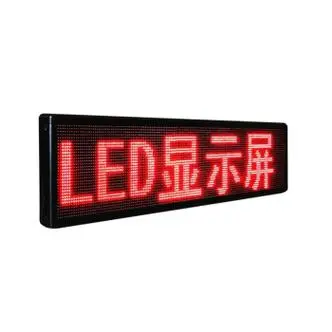
1.Single-color display
The screen backlight has only one color, including red, white, green, yellow, blue, purple, etc. Most monochrome displays use red because red has a higher luminous efficiency and can achieve higher brightness. Monochrome displays are most commonly used for traffic displays and door advertisements.
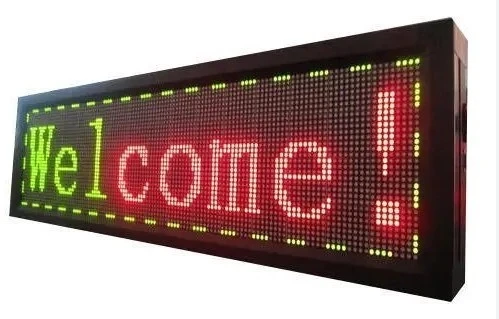
2.Dual-color display
A display made by putting red and green LEDs together as a pixel. Each pixel has two primary colors of red and green, which can be superimposed to produce yellow. Under grayscale control, multiple colors can be combined through the changes in red and green grayscale. Dual-color displays are mostly used for traffic signs.
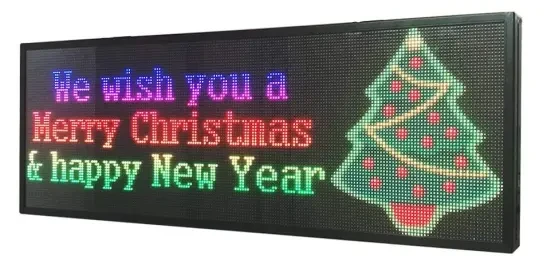
3.Full-color display
A display that puts red, green, and blue LED tubes together as a pixel, also known as a three-primary color display. Each pixel has three primary colors of red, green, and blue. Under grayscale control, the colors of nature can be well restored and almost all colors can be combined. Full-color displays can basically simulate all the colors of a computer, so they can be used to display all kinds of colors that a computer can display.
Classification by location of use:
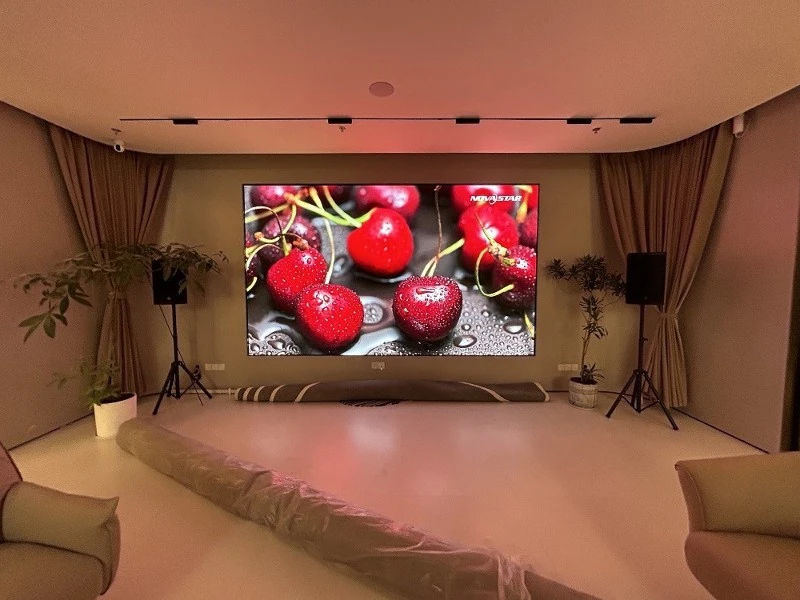
1.Indoor display
Usually used in indoor environments, such as shopping malls, conference rooms, exhibition halls, etc. This type of display has a small dot pitch and a high resolution, which is suitable for close viewing. The area of indoor screens generally ranges from less than a few square meters to dozens of square meters. The pixel density is high. It is used in non-direct sunlight or lighting environments. The viewing distance is several meters away. The screen body does not have the ability to seal and waterproof.
2.Outdoor display screens
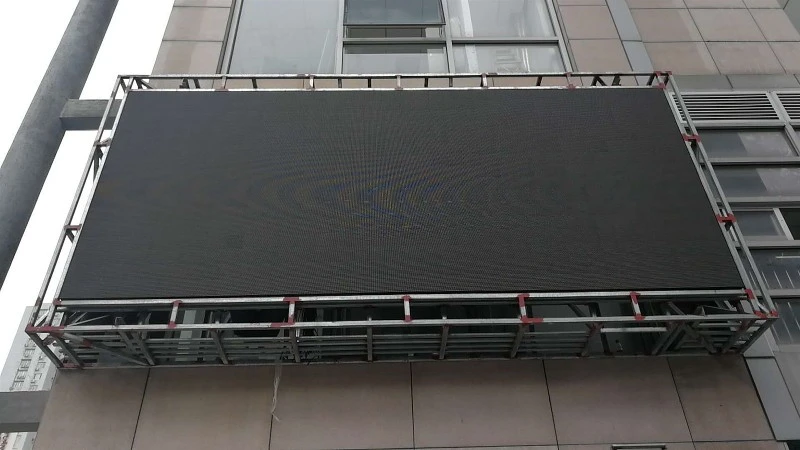
Designed for outdoor environments, such as squares, streets, and building exterior walls. Outdoor display screens are windproof, rainproof, waterproof, and high-brightness. They can clearly display content under direct sunlight. The light point is large, the pixel spacing is large, the brightness is high, it can work in the sun, and it is suitable for long-distance viewing. The area of outdoor screens is generally dozens or even hundreds of square meters. The point density is relatively sparse. The brightness of the light depends on the direction and the brightness requirements are different. It can be used under direct sunlight. The viewing distance is dozens of meters away. The screen body has good wind and rain resistance and lightning protection capabilities.
3.Semi-outdoor display screens
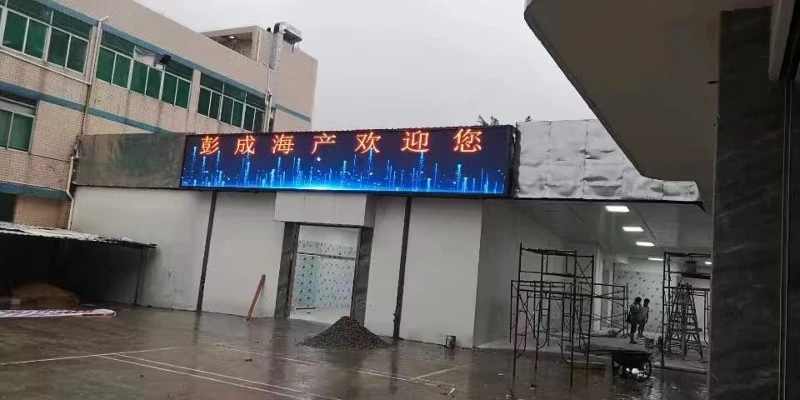
between indoor and outdoor, not rainproof but high brightness. The biggest difference from indoor display screens is that the brightness is higher than that of indoor screens. It is suitable for outdoor use without rain. It is generally used under the eaves or in the window, such as information guidance on the door lintel.
Classification by control mode:
1.Synchronous control
synchronize with display signal sources such as computers and display their content in real time. Commonly used for displaying complex content such as videos, images, animations, etc. This is relative to computers (video sources). In short, a synchronous display screen is one that cannot be separated from a computer (video source) when working. When the computer is turned off (the video source is cut off), the display screen cannot display. Synchronous display screens are mainly used on large full-color display screens and rental screens.
2.Asynchronous control
Can work offline, store and play content through a built-in control card or memory card. Suitable for simple text, picture or animation playback. An asynchronous display screen is one that can be separated from a computer (video source). It has a storage function, and the content to be played is stored in the control card. Asynchronous display screens are mainly used on small and medium-sized display screens and advertising screens.
Classification by pixel pitch:
1.Indoor screens
Common pixel pitches are P0.9mm, P1.2mm, P1.5mm, P1.86mm, P2.0mm, P2.5mm, P3mm, etc.
2.Outdoor screen
Common pixel pitches include P2.5mm, P3mm, P4mm, P5mm, P6mm, P8mm, P10mm, P16mm, etc. The smaller the pixel pitch, the higher the resolution and the more delicate the display effect.
Classification by whether it is easy to disassemble and assemble
1.Fixed display screen
As the name suggests, it is a display screen that will not be removed once installed. Most LED display screens are like this. Once they need to be removed, it is almost equivalent to reinstalling them, which is time-consuming and labor-intensive.
2.Rental screen
As the name suggests, it is a display screen for rental. It is easy to disassemble and transport. The box is small and light. The connecting wires are all aviation connectors. The area is small and the pixel density is high. It is mainly used for weddings, celebrations, performances and other activities. Rental screens are also divided into outdoor and indoor, the difference lies in rainproof performance and brightness. The box of the rental screen is generally made of die-cast aluminum, which is light, rust-proof and beautiful.
Classification by application scenario:
LED display screens can also be classified according to application scenarios, such as applications on the roof of taxis (called taxi roof screens), applications in places such as bars and KTVs (called DJ screens), applications on trucks and trucks (called truck displays), applications in stores (called door screens), etc. In addition, there are conventional screens, curved screens, special-shaped screens (such as circular screens, semicircular screens, parallelogram screens, cylindrical screens, etc.), creative screens (such as can screens, ball screens, cube screens, cone screens, tree screens, sand table screens, vest screens, backpack screens, dynamic mobile phone screens, etc.), etc.
These classification methods are not isolated, and an LED display screen may belong to multiple categories at the same time. And we can also extend more classifications, as follows:
Classification by shape
1. Regular LED display screens
LED display screens are composed of tens to hundreds of thousands of semiconductor light-emitting diode pixels arranged evenly. Different materials are used to make LED pixels of different colors to display various information. It has the characteristics of high brightness, long life, and wide viewing angle. It supports outdoor all-weather use, and the screen area can be large or small to meet the needs of different scenes.
2. special-shaped display screens.
Classification by installation method
Classification by use function